Quick Self-Check
Structure feels solid, wear is only surface-level graying or peeling.
Some bounce, a few soft spots, but not throughout the whole deck.
Soft ledger board, rotted posts, or noticeable structural sway.
Why Ohio Winters Make This Decision More Common Here
Freeze-thaw cycling is what actually does most of the damage to a Dayton deck over time, more than sun exposure alone. Water gets into a seam, a screw hole, or a hairline crack, freezes, and expands, widening that opening a little more with every winter. A deck that goes ten years without any maintenance in a milder climate might show only cosmetic wear, while the same decade in the Miami Valley’s freeze-thaw pattern is far more likely to have compromised at least one structural component. This is part of why regular refinishing, even when a deck looks fine, genuinely extends its structural life and not just its appearance.
If you’re not sure which category your deck falls into, that uncertainty is exactly what a professional inspection resolves. We check the ledger board, posts, and joists specifically, and we’ll tell you honestly which category your deck falls into rather than default to the more expensive option. See our deck repair page or contact us for an assessment.
The Straight Answer Promise
You get a written estimate before we start, a real person on the phone, and an honest answer if a job needs a licensed specialist instead of us. No vague quotes, no upselling, no disappearing after the deposit. If something about the work is not right, tell us and we will make it right.
Deck Refinishing vs Rebuilding FAQs
How much does refinishing cost compared to rebuilding?
Refinishing is a fraction of the cost of a rebuild since it only involves surface prep, staining, and sealing rather than replacing structural lumber.
Can I refinish just part of a deck and rebuild the rest?
Sometimes, if the structural issue is isolated to specific posts or boards rather than the whole frame. We assess this on a case-by-case basis.
How often should a deck be refinished to avoid needing a rebuild?
Every few years depending on sun and weather exposure. Regular refinishing is what prevents the freeze-thaw damage that eventually forces a rebuild.
Is a wobbly railing always a sign I need a full rebuild?
Not necessarily. If the posts themselves are sound, a wobbly railing is often repairable on its own without rebuilding the whole deck.
Do you offer a free deck inspection?
We assess the deck as part of any estimate visit and give you an honest read on whether refinishing or rebuilding makes more sense.
Not Sure Which Your Deck Needs? Ask Us
Seasonal Guide · Deck Care
Deck Refinishing vs. Rebuilding: How to Tell Which One You Need
A practical way to tell whether your Dayton deck needs a refinish or a full rebuild.
The deck refinishing vs rebuilding question comes up constantly for Dayton homeowners once a deck has been through several Ohio winters, and getting the answer wrong in either direction costs real money. Refinishing a deck that actually needs structural work just delays an inevitable rebuild while looking fine on the surface. Rebuilding a deck that only needed refinishing wastes thousands of dollars on a structure that had years of life left in it. The good news is that the difference is usually easy to spot once you know exactly where to look.
Signs You Only Need Refinishing
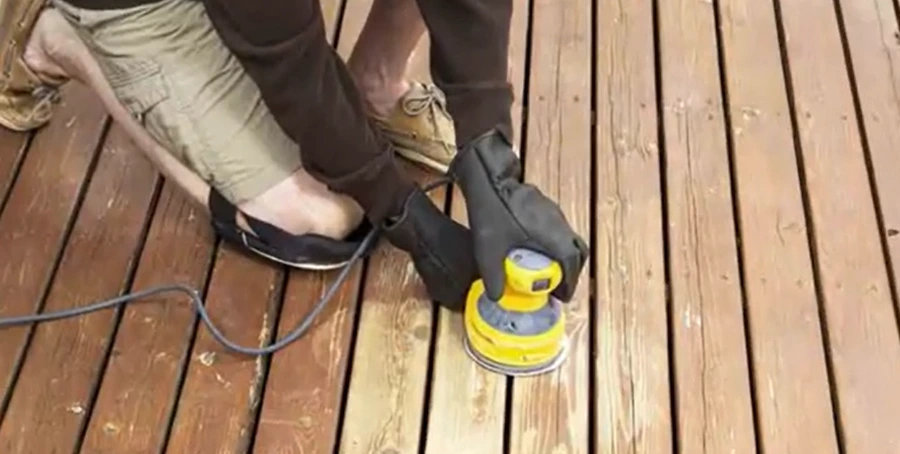
If the deck feels solid when you walk across it, with no bounce, sway, or soft spots underfoot, the structure underneath is very likely fine. Surface graying, a faded or peeling finish, and minor splintering are all cosmetic issues that sanding, staining, and sealing address completely. A deck with these symptoms but a sound frame is one of the more satisfying repairs to do, since the transformation from weathered gray wood to a freshly stained deck is dramatic for a relatively modest cost.
Small areas of surface mildew, minor nail pops, or a handful of screws that have backed out are also refinish-level issues. These get addressed as part of the prep work before staining, not as separate structural repairs.
Signs You Need a Rebuild, Not a Refinish
The ledger board, where the deck attaches to the house, is the single most important thing to check, since it carries a large share of the deck’s total load and is constantly exposed to water runoff. Soft, spongy wood anywhere on the ledger board, or visible gaps where it meets the house, are structural red flags that refinishing cannot fix. The same goes for support posts: press a screwdriver gently into the wood near the base of each post, at ground level and just below. If it sinks in easily rather than meeting resistance, that post has internal rot and needs replacement.
Noticeable bounce or sway when several people stand on the deck at once, boards that feel spongy underfoot rather than just worn on the surface, and any visible separation between the deck and the house are all signs the structure itself has been compromised. At that point, a rebuild is the safer and ultimately more cost-effective choice, since a structural failure is a genuine safety risk, not just a cosmetic problem.
Quick Self-Check
Structure feels solid, wear is only surface-level graying or peeling.
Some bounce, a few soft spots, but not throughout the whole deck.
Soft ledger board, rotted posts, or noticeable structural sway.
Why Ohio Winters Make This Decision More Common Here
Freeze-thaw cycling is what actually does most of the damage to a Dayton deck over time, more than sun exposure alone. Water gets into a seam, a screw hole, or a hairline crack, freezes, and expands, widening that opening a little more with every winter. A deck that goes ten years without any maintenance in a milder climate might show only cosmetic wear, while the same decade in the Miami Valley’s freeze-thaw pattern is far more likely to have compromised at least one structural component. This is part of why regular refinishing, even when a deck looks fine, genuinely extends its structural life and not just its appearance.
If you’re not sure which category your deck falls into, that uncertainty is exactly what a professional inspection resolves. We check the ledger board, posts, and joists specifically, and we’ll tell you honestly which category your deck falls into rather than default to the more expensive option. See our deck repair page or contact us for an assessment.
Deck Refinishing vs Rebuilding FAQs
How much does refinishing cost compared to rebuilding?
Refinishing is a fraction of the cost of a rebuild since it only involves surface prep, staining, and sealing rather than replacing structural lumber.
Can I refinish just part of a deck and rebuild the rest?
Sometimes, if the structural issue is isolated to specific posts or boards rather than the whole frame. We assess this on a case-by-case basis.
How often should a deck be refinished to avoid needing a rebuild?
Every few years depending on sun and weather exposure. Regular refinishing is what prevents the freeze-thaw damage that eventually forces a rebuild.
Is a wobbly railing always a sign I need a full rebuild?
Not necessarily. If the posts themselves are sound, a wobbly railing is often repairable on its own without rebuilding the whole deck.
Do you offer a free deck inspection?
We assess the deck as part of any estimate visit and give you an honest read on whether refinishing or rebuilding makes more sense.